Upcoming Events
Feeling the Future: Asian/Americanist Takes on Techno-Empire, Chinamaxxing, & the “American Century of Humiliation”
Brian J. Chen, Julie Chu, Jasmine Ehrhardt, & Paul Kim in conversation with Lisa Nakamura
Refuse, Resist, Repair: Making Critical Moves in the Times of AI
Jenny Davis, Julián Posada, Apryl Williams, & Rua Williams in conversation with Catherine Knight Steele
Is AI Inevitable? Insight from Hypecel vs. Technoskepticist Perspectives
Nina-Simone Edwards, Ngozi Harrison, & Stephanie (DJ) Jones in conversation with Rayvon Fouché

Trans Coalition-Building and Digital Activism
Alejandra Caraballo and Celeste Trianon in conversation with M. Remi Yergeau

From Community Center to Content Farm: New Modes of Digitality for Black Women and Girls
Aria Halliday, Nessa Keddo, Ashleigh Greene Wade, & Rianna Walcott in conversation with Catherine Knight Steele
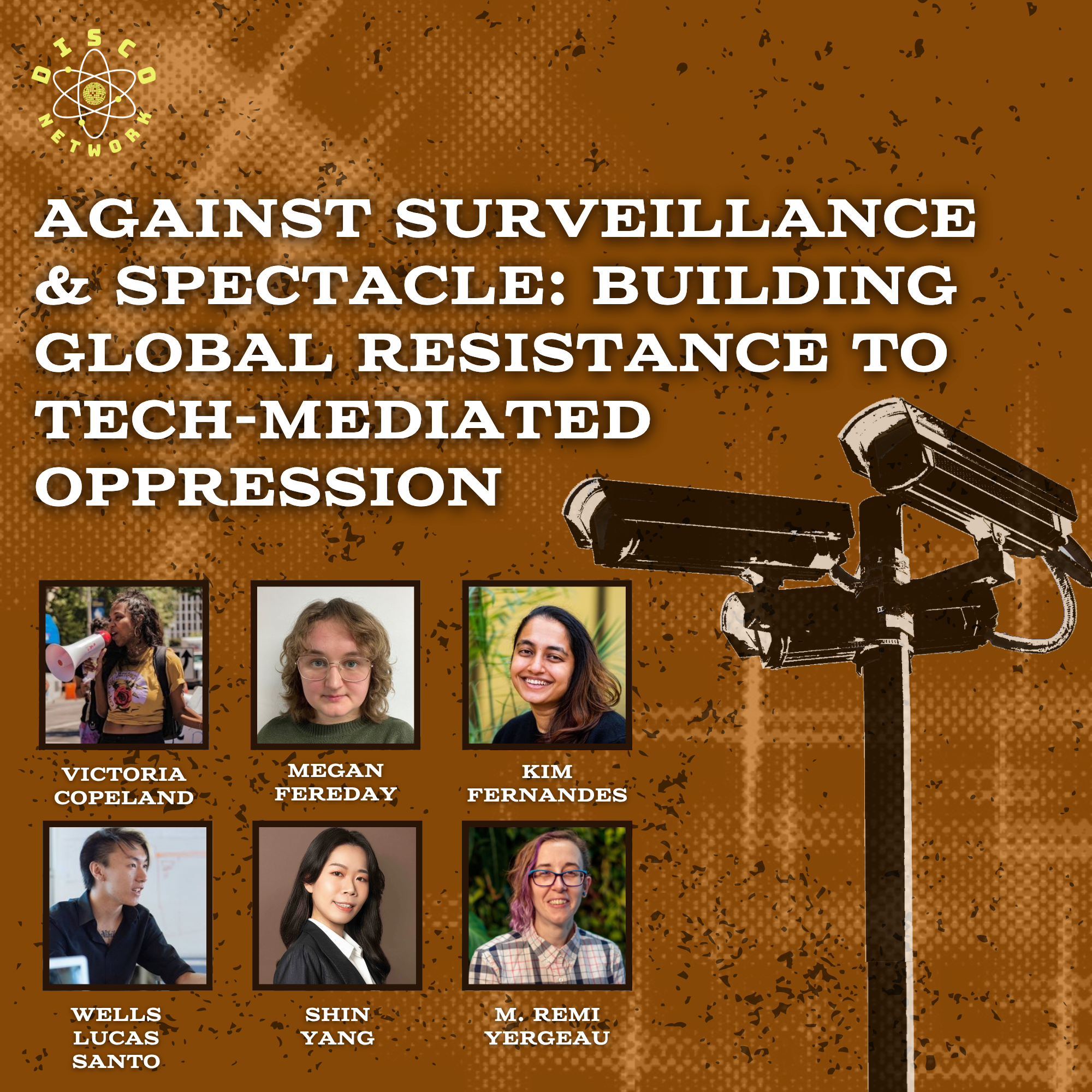
Against Surveillance & Spectacle: Building Global Resistance to Tech-Mediated Oppression
What does it mean to be in community? This panel brings together activists, scholars, and writers to explore connections between critical social issues—health justice, discrimination, technofascism, and surveillance—and the possibilities of grassroots response. Panelists will discuss tensions between collectivizing and collaborating: How do we negotiate care when our access to care hinges on being identified and enumerated by the state? What tactics for resistance might we use in digital communities that are subject to increased surveillance? How can we be there for and with each other?
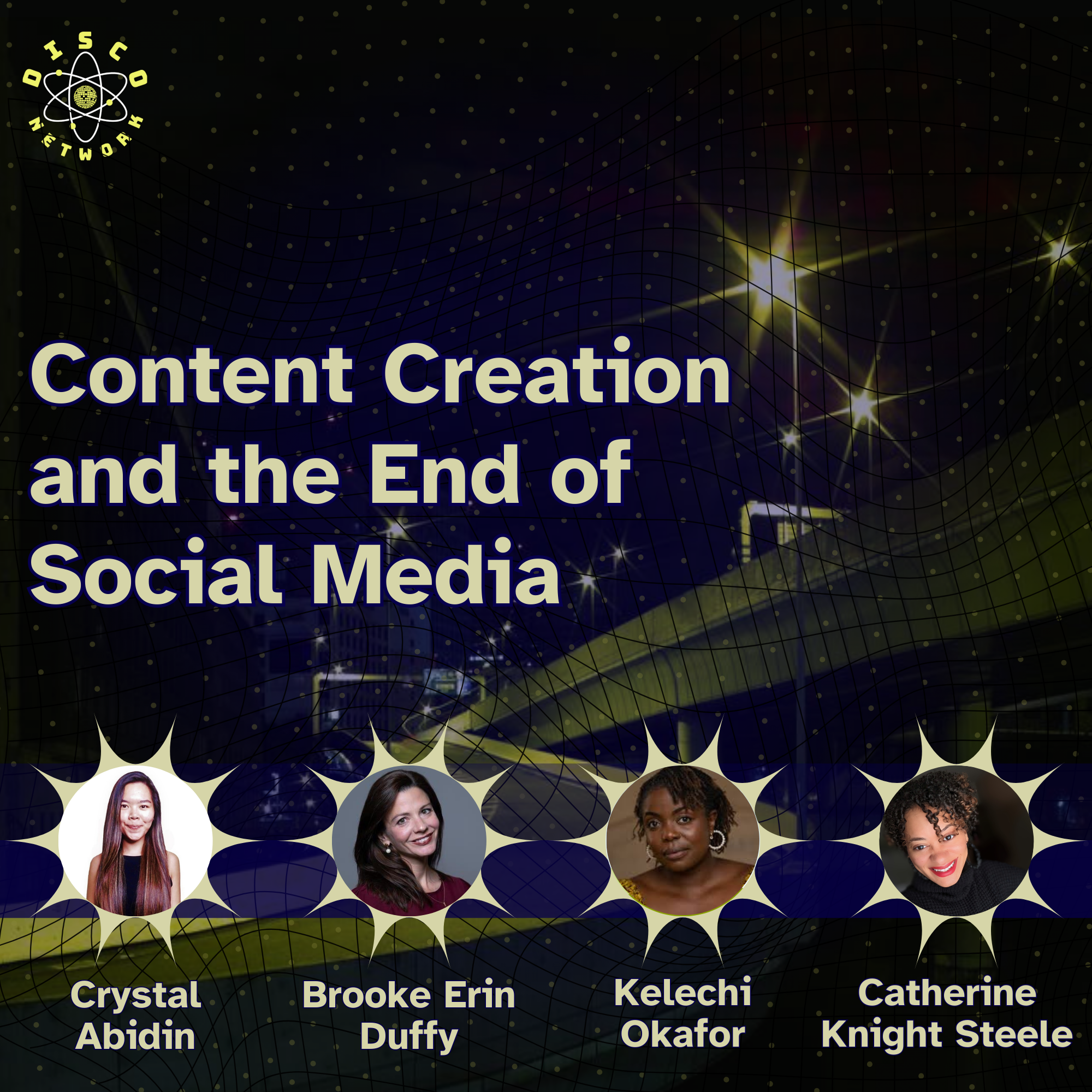
Content Creation and the End of Social Media
Is social media still social? With the spread of content creation as a business, political strategy, and pastime across platforms, where is the space for sociality in social media? This panel examines the role of engagement farming, influencer culture, misinformation, disinformation, and AI in reshaping social media as a creator economy. In a digital landscape where we all serve as content creators and/or unwitting sources of valuable data, we explore whether social media is still a desirable avenue for forming and cultivating community, engaging in organizing strategies, or simply being social.

Black Boys and the Future of Technology
Can technology improve the lives of Black boys? Recently, new reports, with familiar conclusions, discuss the way Black boys continue to fall behind, which is partially responsible for shrinking enrollments of Black men in college. Particularly striking are the declining numbers at HBCUs. In turning this conversation away from negative reporting toward positive action, we will explore the ways technology can intervene and provide new opportunities, pathways, and platforms for Black boys to thrive.
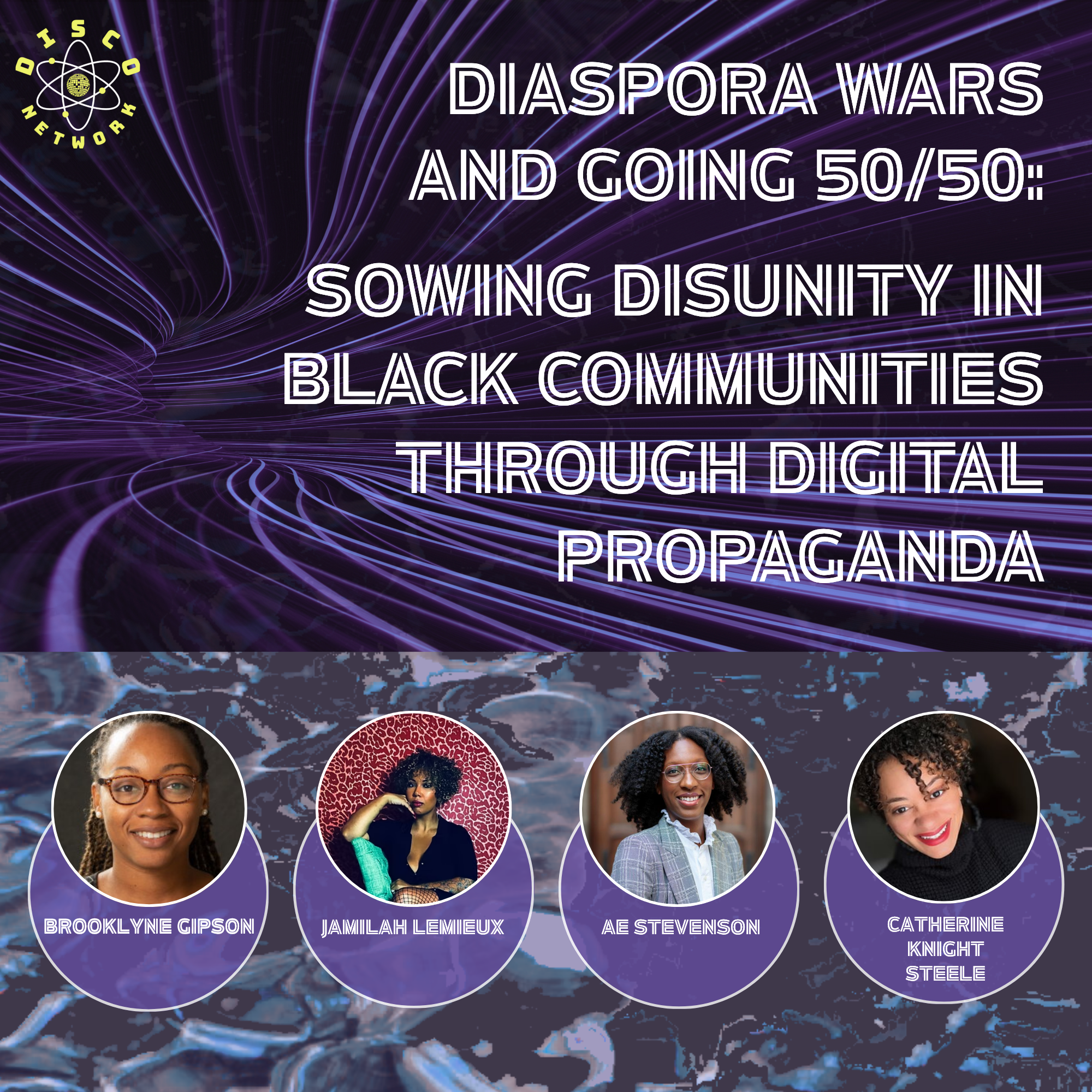
Diaspora Wars and Going 50/50: Sowing Disunity in Black Communities Through Digital Propaganda
This panel brings together Black feminist scholars, writers, and public intellectuals to examine how and why debates about gender, sexuality, and nationality consistently emerge as top topics on social media platforms within Black discursive communities. How do algorithms and influencer culture contribute to sowing discontent and misinformation among Black social media users? We consider the social and political implications, who ultimately benefits from these conversations, and how we can make different choices around our own engagement and participation.

Search Engines Presents | Search History Volume 2 Launch Party
The Search History zine meditates on the implications of an increasingly digital world and asks questions like: How does art help us redefine what technology is? What is your vision of the future and how can art and technology make it a reality? And how do interdisciplinary practices in technology expand traditional knowledge production and storytelling?
DSI Lecture Series | Forging Feminist Futures from "Creepy" Technologies: The Politics of Smart Tech and Liberation Dreams
In this talk, Neda Atanasoski and Nassim Parvin will discuss their recent book and edited volume, Technocreep and the Politics of Things Not Seen, published by Duke University Press in May 2025. New and emerging technologies, especially ones that infiltrate intimate spaces, relations, homes, and bodies, are often referred to as creepy in media and political discourses. The book introduces a feminist theory of creep, substantiating it through critical engagement with smart homes, smart dust, smart desires, and smart forests, toward dreams of feminist futures.
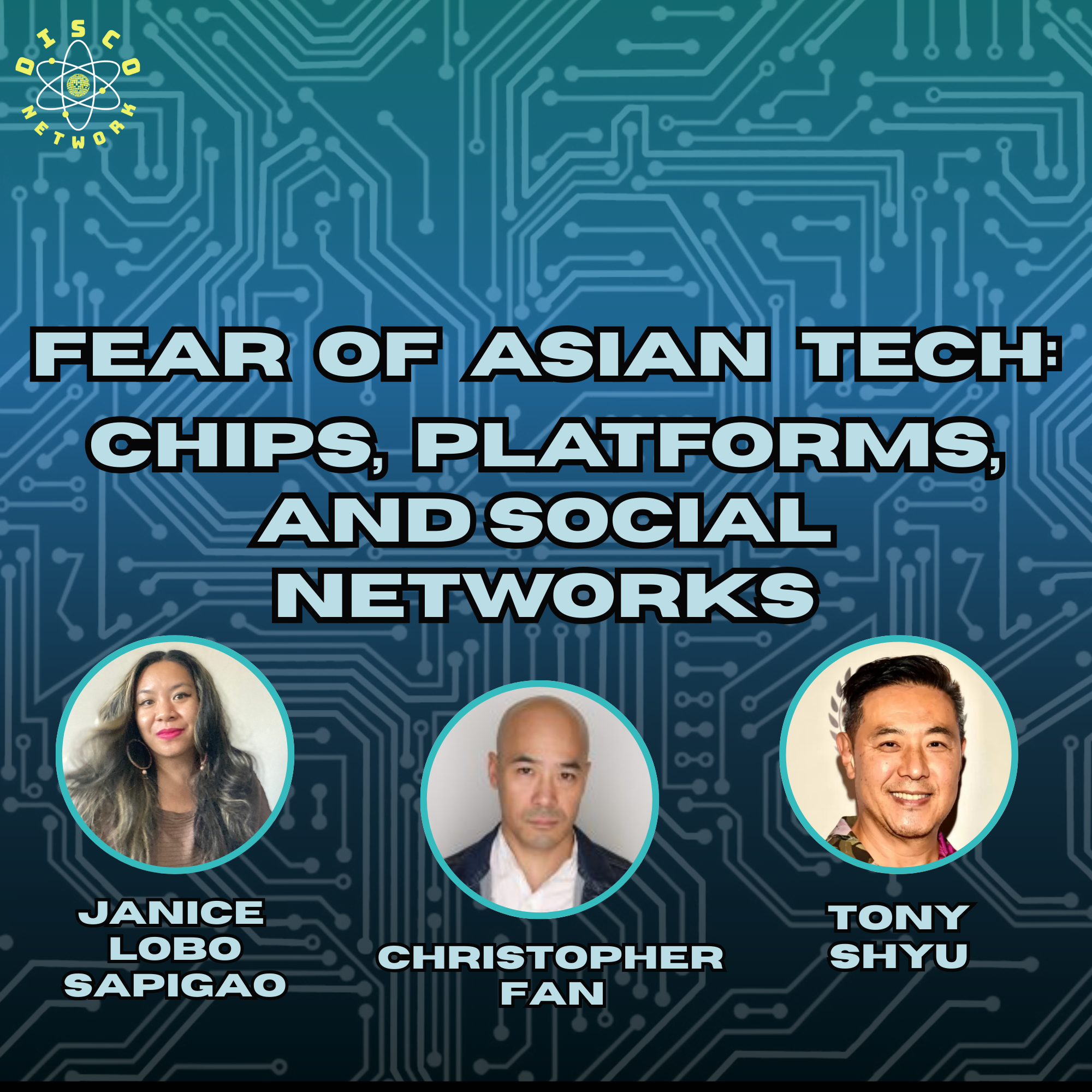
CANCELLED: Fear of Asian Tech: Chips, Platforms, and Social Networks
Fear and suspicion of Asian technology-- from DeepSeek AI, to social media platforms like TikTok, to Taiwanese semiconductor giants like TSMC that supply the world with chips-- is higher in the U.S. than it has been for decades. This panel brings together leading Asian American researchers, artists, and filmmakers to explore Asia’s role in building today’s high technology. We will also examine how rising anxiety around Asian tech impacts Asian American communities in the U.S. today.
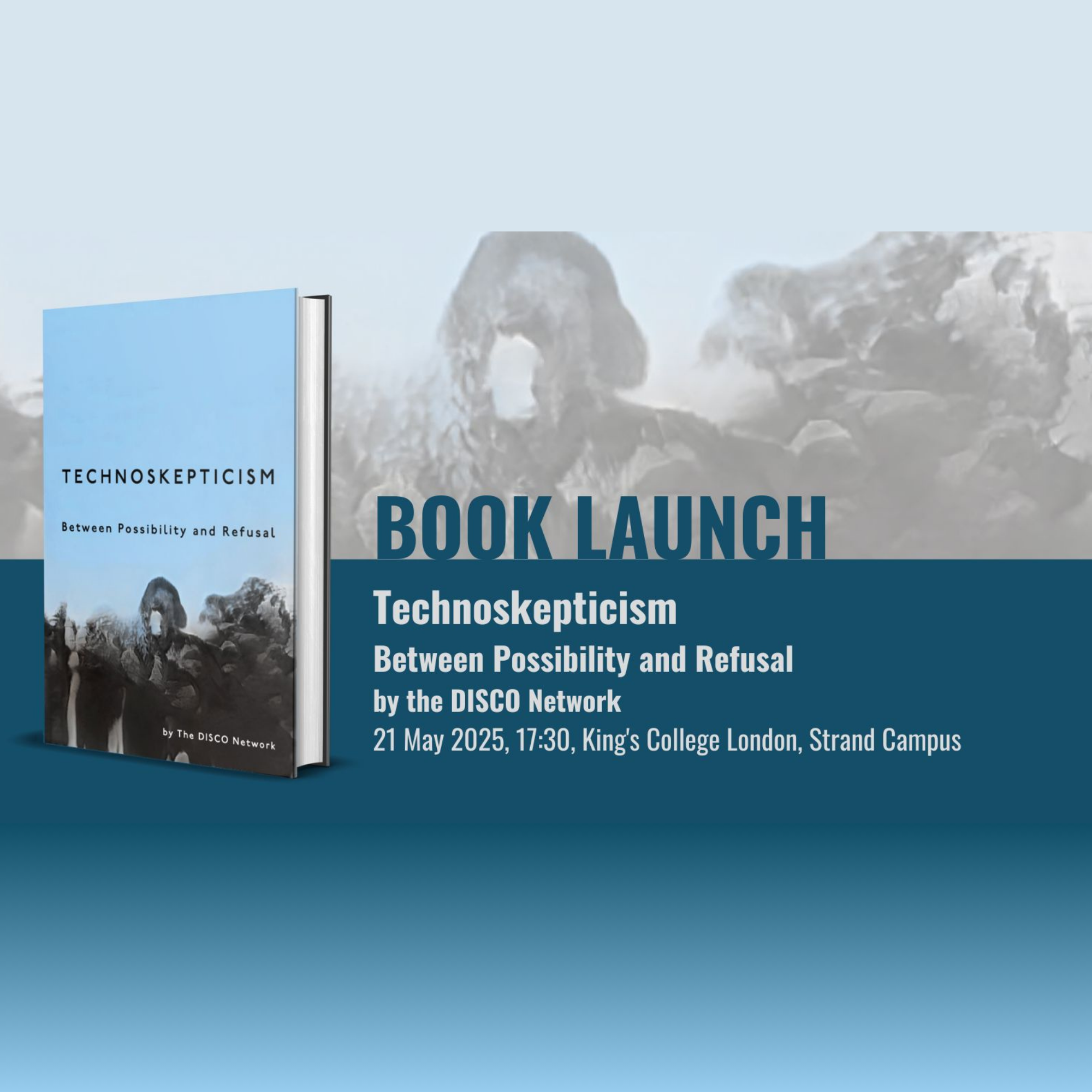
Technoskepticism: Between Possibility and Refusal Launch | King’s College London
The Department of Digital Humanities and the Centre for Digital Culture at King’s College London are delighted to host the launch of the DISCO Network’s Technoskepticism: Between Possibility and Refusal (Stanford University Press, 2025). The event will be chaired by Dr. Zeena Feldman (KCL, Senior Lecturer in Digital Culture).
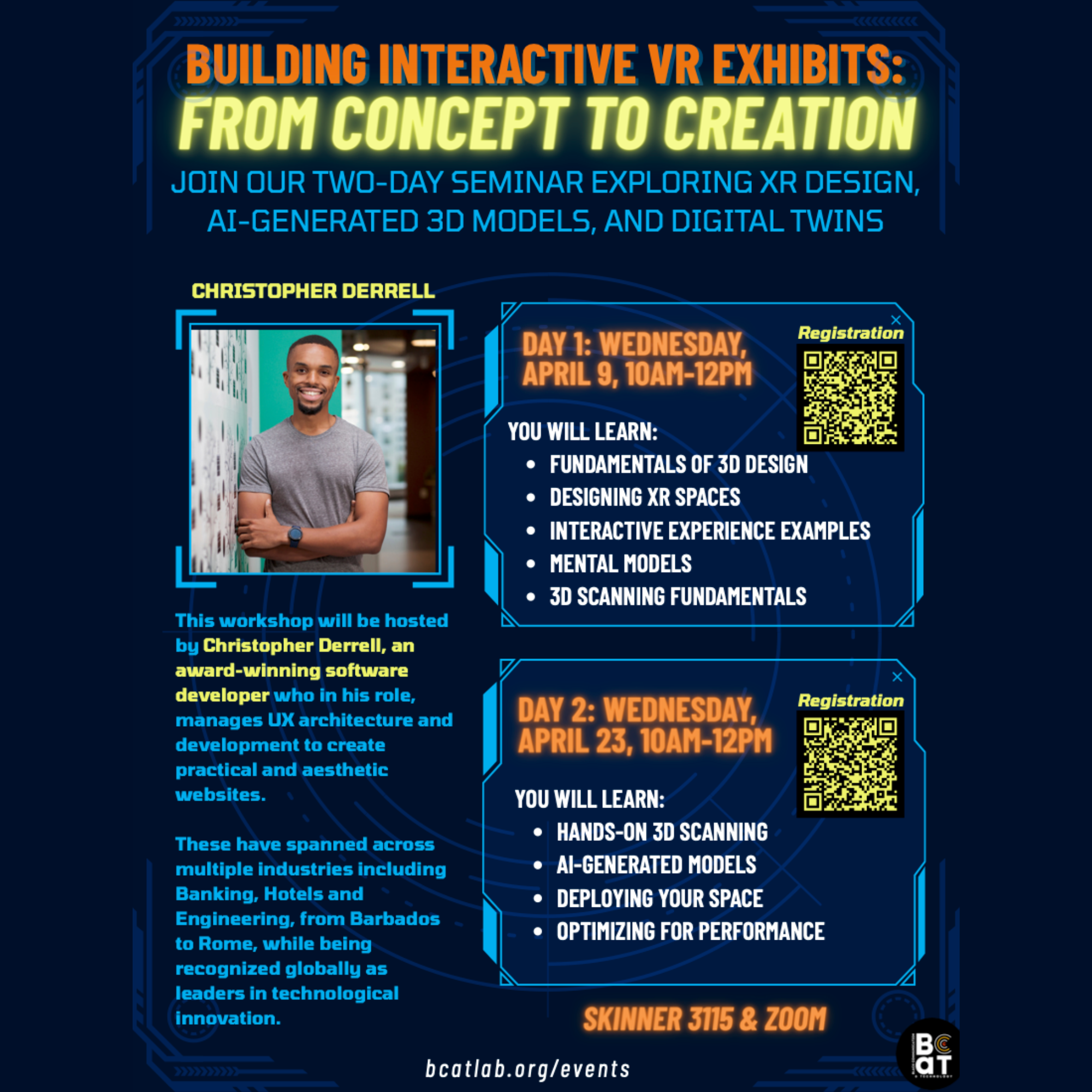
Building Interactive VR Exhibits: From Concept to Creation | Day 2
This workshop will be hosted by Christopher Derrell, an award-winning software developer who in his role, manages UX architecture and development to create practical and aesthetic websites.

DISCO Network Presents: Building the Indigenous Internet
This panel brings together key voices in infrastructure as broadly imagined, data sovereignty and decolonial perspectives to critically explore the history, present, and future of the indigenous Internet. The conversation will showcase how Indigenous knowledge has and will continue to shape data worlds by bringing together interdisciplinary perspectives on emerging technologies—ranging from computer science, artificial intelligence, social media, online activism, the work of infrastructure and circuit building, and beyond. By centering Indigenous voices, the discussion aims to create transformative visions for a sustainable, equitable, and inclusive digital future while inviting speculative thinking about post-settler digital worlds.

DISCO Network Presents: TikTok, DeepSeek and the Fear of Chinese Tech in Nationalist Times
For the first time, two of the most popular apps in the world – TikTok and the A.I. chatbot DeepSeek – are Chinese. American legislative efforts to restrict or outright ban Chinese apps and other technologies on the grounds of national security have dominated recent headlines. During a time of political turmoil, increasing hostility towards trade with other nations, and the rush to maintain U.S. dominance over the tech industry, anti-Chinese sentiment has (re)surfaced in ways that echo earlier American anxieties about Asian labor competition and racial difference. This panel will bring together Asian American media scholars and culture creators to analyze what this climate means for our shifting technological landscape, Asian American communities, and race relations in the U.S.

BCaT Lab Technoskepticism Launch
Join us for the launch of the book Technoskepticism! From Munchausen by Tiktok, to wellness apps, to online communities, to AI, the DISCO Network explores the possibilities that technoskepticism can create. Technoskepticism explores possibility and refusal in new technologies, highlighting how people of color and disabled individuals have long navigated between acceptance and rejection. Technoskepticism shares their stories, revealing the opportunities skepticism can create.

DISCO CO(LAB) Workshop: Archives & Black Traditions
Archives and the Black Tradition explores the significance of personal and digital archives in re/defining historical legacies, promoting narrative control and agency, and expanding conventional notions of memory, place, and truth.

Book Launch - Technoskepticism by Huan He
Come celebrate the publication of Technoskepticism: Between Possibility and Refusal with Huan He of the DISCO Network.

Technoskepticism: Between Possibility and Refusal Launch Party
Celebrate the publication of Technoskepticism: Between Possibility and Refusal with the DISCO Network and the Digital Studies Institute! Join us for the release of our new multi-authored monograph with seven of the book's fourteen co-authors.

Search Engines: Molly Soda
Search Engines: Art, Tech, Justice and the DISCO Network, housed in the University of Michigan’s Digital Studies Institute, invite you to an artist's talk by Molly Soda.

BCaT Applies: Graduate Application Clinic
Join the BCaT Lab to learn about and receive assistance with the grad school application process!

DISCO CO(LAB): BCaT Bookclub
In our final book club of the semester, the BCaT Lab will be exploring the virtual reality experience “Obsidian”, created by the Black Artists and Designers Guild in 2021. Obsidian is an interactive web story, exploring a digitally recreated home from Oakland Hills, California.
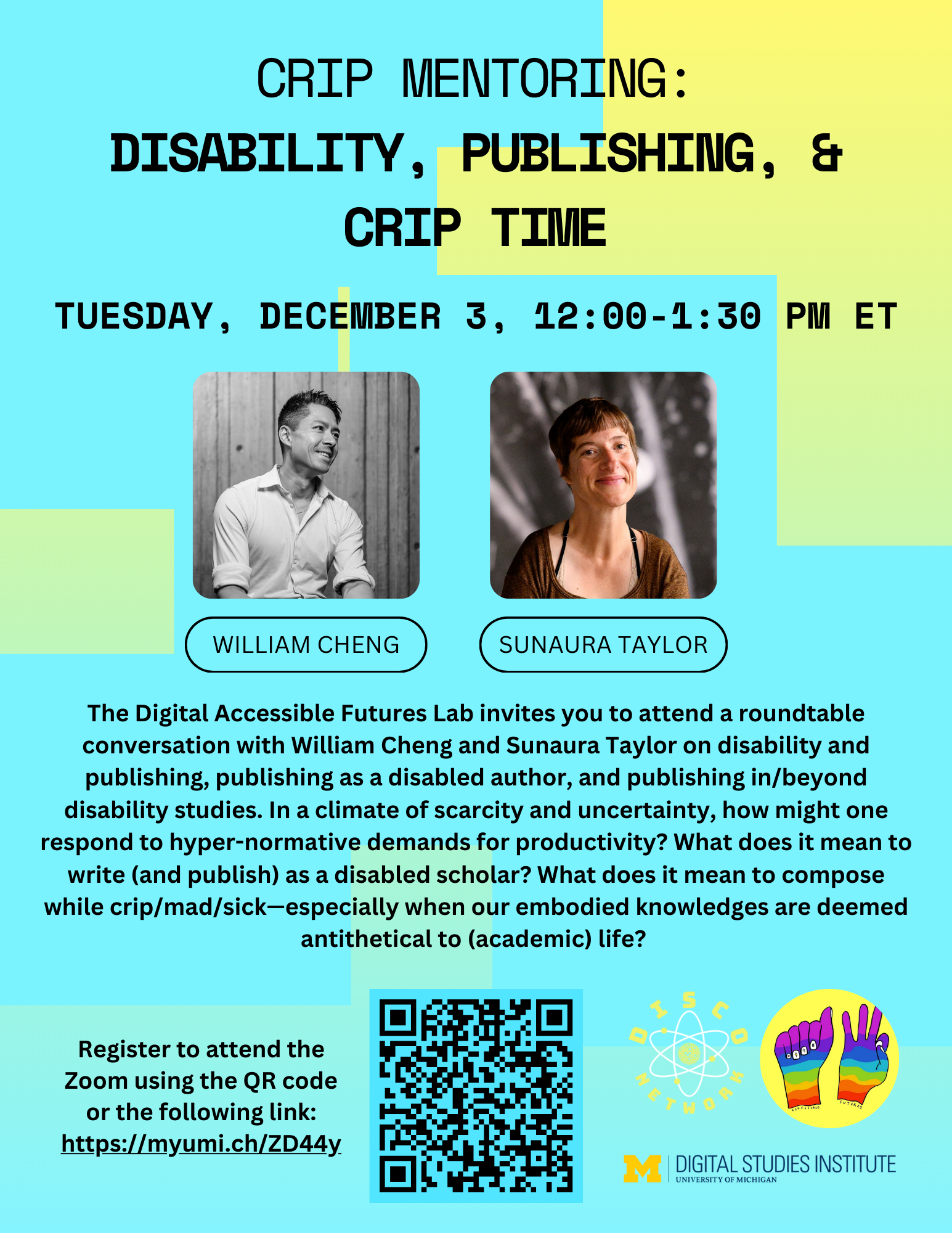
DAF Lab: Publishing on Crip Time
In a climate of scarcity and uncertainty, how might one respond to hyper-normative demands for productivity? What does it mean to write (and publish) as a disabled scholar? What does it mean to compose while crip/mad/sick—especially when our embodied knowledges are deemed antithetical to (academic) life?
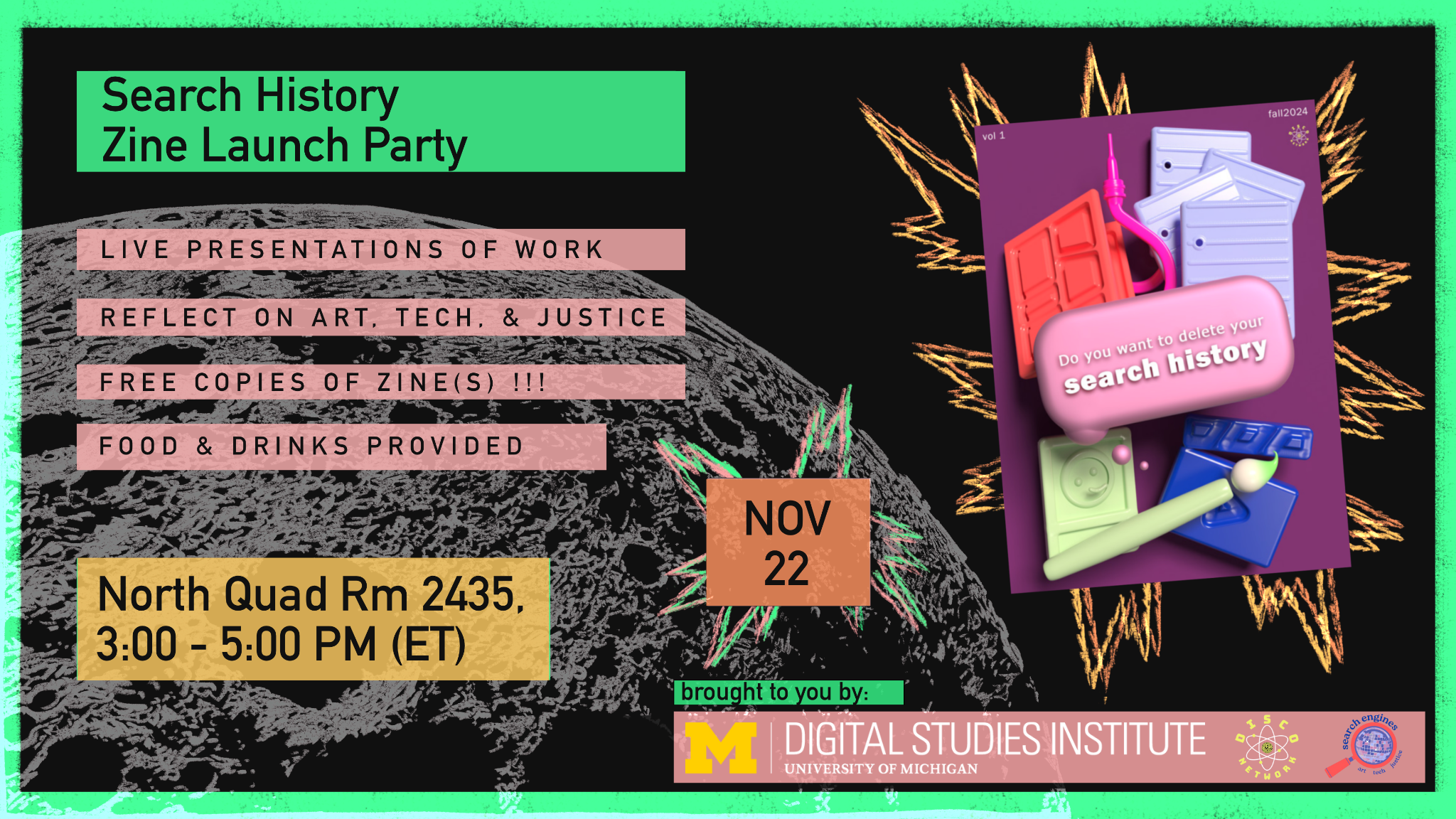
Search History Zine Launch Party
Search Engines: Art, Tech, Justice invites you to join us in celebrating the release of the Search History zine!

DISCO CO(LAB): BCaT Bookclub
This semester in BCaT Bookclub we will engage with art exhibitions, films, readings, and more, while exploring Black placemaking practices across the diaspora. View the BCaT Lab’s Black Homeplace Project page for up-to-date information about the weekly topic.

BCaT Field Trip
The BCaT Lab is hosting a field trip on November 20th to the National Museum of African American History and Culture.
DISCO CO(LAB): BCaT Bookclub
This semester in BCaT Bookclub we will engage with art exhibitions, films, readings, and more, while exploring Black placemaking practices across the diaspora. View the BCaT Lab’s Black Homeplace Project page for up-to-date information about the weekly topic.

Virtual Conversation with Paul B. Preciado

“Come, come! I’m sick to death of this particular self. I want another.” Taking Virginia Woolf’s novel “Orlando: A Biography” as his starting point, academic virtuoso turned filmmaker Paul B. Preciado fashioned the documentary ORLANDO, MY POLITICAL BIOGRAPHY—a personal essay, historical analysis, and social manifesto. For almost a century, Woolf’s eponymous hero(ine) has inspired readers with their gender fluidity as well as their physical and spiritual metamorphoses across a three-hundred-year span. In making his film, Preciado invited a diverse group of more than twenty trans and nonbinary people to play the role of Orlando and to participate in this shared biography. Together, they perform interpretations of the novel, weaving into Woolf’s narrative their own stories of transition and identity formation. Not content to simply update a groundbreaking work, Preciado interrogates the relevance of “Orlando” in the ongoing struggle to secure dignity for trans people worldwide.
Join us in the DSI Lab (G325 Mason Hall) or virtually via Zoom to discuss the 2023 documentary, “Orlando: My Political Biography,” with the filmmaker, Paul B. Preciado.
Email Atticus Spicer (ospicer@umich.edu) to RSVP!
Watch the film trailer.
Come in-person for a copy of our zine/program from the screening hosted by Search Engines in September!
DISCO CO(LAB): BCaT Bookclub
This semester in BCaT Bookclub we will engage with art exhibitions, films, readings, and more, while exploring Black placemaking practices across the diaspora. View the BCaT Lab’s Black Homeplace Project page for up-to-date information about the weekly topic.

Association of Internet Researchers Conference: Technoskepticism Roundtable
Join DISCO Network scholars in a roundtable conversation on Technoskepticism, a topical and timely multi-authored 50,000 word monograph, at the Association of Internet Researchers Conference in Sheffield, UK.
DISCO CO(LAB): BCaT Bookclub
This semester in BCaT Bookclub we will engage with art exhibitions, films, readings, and more, while exploring Black placemaking practices across the diaspora. View the BCaT Lab’s Black Homeplace Project page for up-to-date information about the weekly topic.
DISCO CO(LAB): BCaT Bookclub
This semester in BCaT Bookclub we will engage with art exhibitions, films, readings, and more, while exploring Black placemaking practices across the diaspora. View the BCaT Lab’s Black Homeplace Project page for up-to-date information about the weekly topic.

Crip Mentoring: Creating Accessible Conferences
This roundtable conversation considers what it means to design accessible conference presentations, as well as how to survive and navigate conferences as a disabled scholar. How might we advocate for access in inaccessible and often high-stakes terrain? What strategies might we use in our own conference practices to support the work of access creation?

BCaT Applies: Alt-Academia
If you are a near/recent grad student considering a career outside of academia, join us as we hear from representatives from the (Smithsonian) National Museum of African American History and Culture, the American Council of Learned Societies (ACLS), and independent scholars.